


The untold story behind the development of the Zackroll YAJIROBEE ~Episode 1~
The Genesis of the ZACRAWL YAJIROBEE: Connecting Heritage with Global Apex Predators
By: Nakanishi, ADUSTA Lure Designer
Hey everyone, Nakanishi here, lead lure designer for ADUSTA.
In this blog series, I want to take you deep into the development stories, design concepts, and custom tuning secrets of the ZACRAWL YAJIROBEE—details we’ve never shared with the public until now.

For Episode 1, we are going back to the very beginning. How did the concept for the ZACRAWL YAJIROBEE come to life, and what sparked the creation of this unique crawler bait? Let’s dive in.
1. The Blueprint: A Direct Request from Australia
The journey kicked off immediately following the 2016 Osaka Fishing Show. I sat down for a strategic product meeting with Stefan, the founder of Gladiator—ADUSTA’s official Australian distributor.
In the Australian domestic market, surface crawlers (commonly referred to there as "noisy plugs") like the Halco Night Walker have long been staple tackle choices for targeting Murray Cod and Australian Bass. Stefan pointed out that Aussie anglers were highly eager for ultra-premium, Japanese-engineered wing-baits. Right then and there, ADUSTA officially greenlit a dedicated project to build a world-class crawler bait engineered to withstand the brutal power of Murray Cod and Australian Bass.

2. Honoring the Icons of Crawler-Bait Ancestry
The lineage of winged topwater lures is rich and deep. Globally, the most recognizable grandfather of this category is undoubtedly the Heddon Crazy Crawler. However, if you trace the design roots back even further—about 12 years prior to Heddon's 1940s release—the true origin dates back to 1928, when Jim Donaly Baits released the legendary Wow and Jersey Wow. Looking at the market today, it is mind-blowing to realize that the fundamental blueprint of the crawler bait has remained virtually unchanged for nearly a century. It is a beautifully mastered category of lure design.
In the mid-1990s, Japan experienced its first massive topwater bass fishing boom. At the forefront of that movement was Quiet Funk's Decadance Toy, a lure that laid the foundation for modern Japanese-made wing-baits and completely dominated the surface-fishing scene. I grew up fishing these legendary baits, falling in love with the art of Japanese topwater bass fishing.

3. The Test Tackle: Prioritizing Low-Gear Cranking Power
Studying the evolution of Japanese wing-baits, I knew that an absolute, non-negotiable metric was an immediate startup response during a dead-slow crawl. This became the exact variable I obsessed over during R&D.
My primary validation setup during the development of the YAJIROBEE consisted of:
Rod: A 6’10” Medium-Heavy (MH) Glass-Composite casting rod.
Line: 16lb Nylon Monofilament.
Reel: Shimano Calcutta Conquest 200 rigged with a low-gear ratio (approx. 5.1:1).
This specific tackle configuration was chosen strictly to maximize our strike-to-hookup ratio. Crawler baits are notorious for generating violent, erratic surface blowups where fish often miss the hooks. A forgiving glass-composite rod combined with stretchy monofilament ensures the fish can fully inhale the bait before the rod loads up. Furthermore, the low-gear reel allows for micro-adjustments to your retrieve speed, making it effortless to keep the bait in its optimal swimming cadence. It offers a night-and-day performance difference compared to standard or high-speed gear ratios.

4. Surface-Film Adhesion and Water Displacement
When I tune any topwater plug, my primary focus is how seamlessly the bait interacts with the surface film. True "water displacement" means the lure carries a specific gravity heavy enough to stay pinned to the surface tension, wrapping the water around its body contours rather than skittering over it loosely.
Despite being a winged crawler, the ZACRAWL YAJIROBEE is engineered with a high-density body and a distinct rear-weighted center of gravity. This allows the bait to sit deeper in the surface film, displacing a massive hydro-acoustic footprint as it rolls.

Maximizing Aerodynamics and Castability
This rear-weighted configuration serves a dual purpose: it completely solves the casting issues that plague traditional wing-baits. Crawler baits typically catch the wind, tumbling and fouling your line mid-air. The YAJIROBEE cuts cleanly through the air with arrow-like stability. This superior castability allows you to execute pinpoint, long-distance presentations directly into tight target zones—such as under overhanging trees or directly into the heart of current seams.
5. Lessons from the Australian Backcountry
By January 2017, our initial hand-carved, high-buoyancy polyurethane prototypes were ready for field validation. I traveled to Australia to put them to the test in real-world conditions.
We arrived in the middle of an unprecedented heatwave, with temperatures hitting a scorching 39°C (102°F). The water temperatures were through the roof. Our local guide, Matt, looked at the conditions and warned us: "It’s going to be a brutally tough bite today."
We hiked down into a steep, breathtaking canyon gorge as dusk approached. Casting the YAJIROBEE prototype along the rock walls, I was met with three explosive, bone-shattering surface strikes. However, none of them connected. Murray Cod aren't always precision feeders; they often strike aggressively right behind a moving lure, resulting in short-strikes.

The Price of Excitement: Analyzing Hardware Strain
In the adrenaline rush of the moment on the water, I didn't inspect the prototype closely. It wasn’t until I returned to the design lab in Japan and analyzed the lure under a microscope that I noticed the rear split ring had been completely pulled straight.
The fish hadn't missed the bait; I had actually hooked them and suffered a mechanical failure due to the extreme torque of a cod's twist. This was a massive wake-up call. We immediately took this data and overhauled the hardware specifications, shifting to high-density, heavy-duty through-wire components and adjusting the final production weight distribution to create the rear-weighted, high-density ZACRAWL YAJIROBEE we market today.


6. Surviving the Amazon Gauntlet
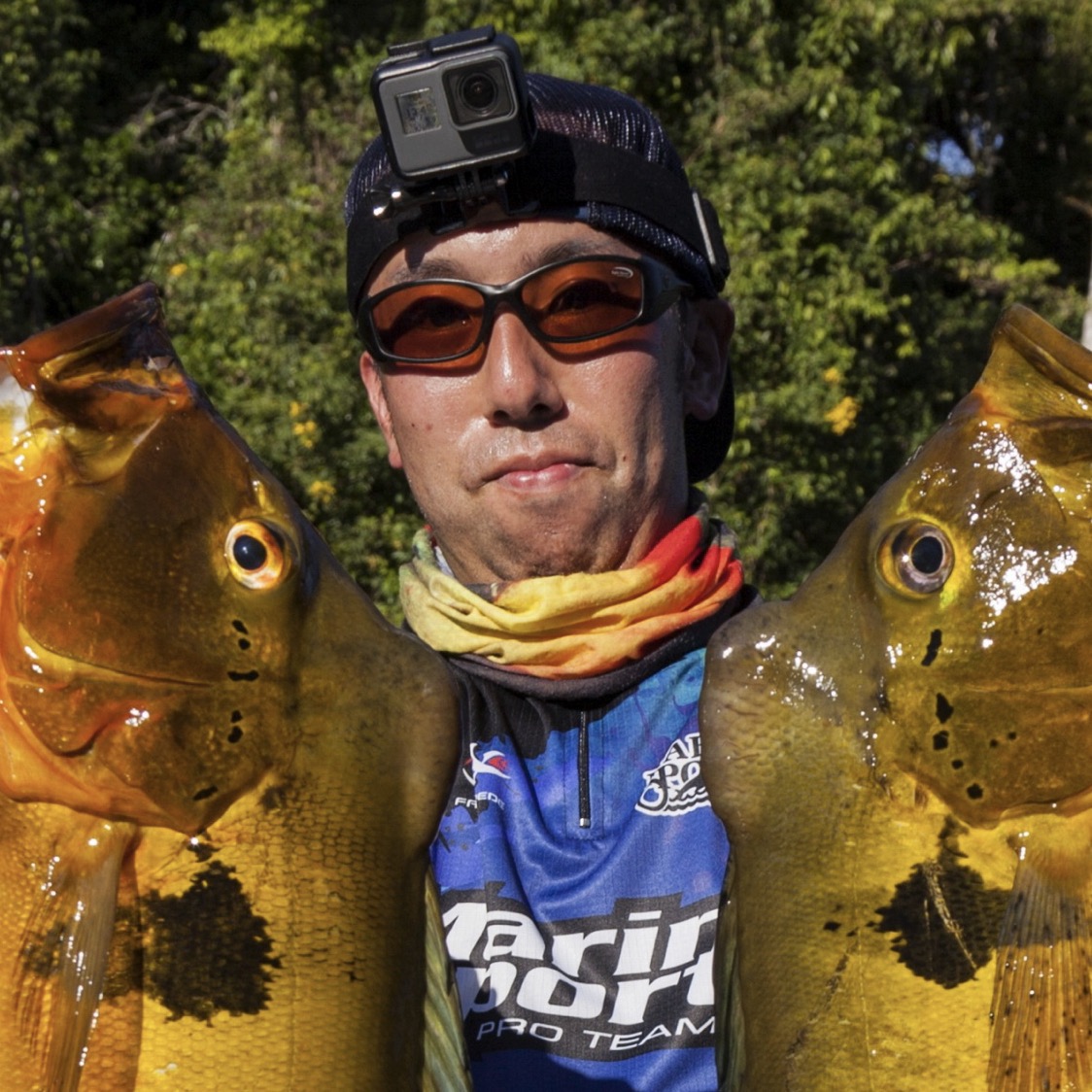
In July of that same year, I headed deep into the Amazon basin. While my primary objective was validating our tropical minnows and pencil baits, it provided the perfect proving ground to test our advanced ABS injection-molded prototypes for the Jerk Spiker 130, the YAJIROBEE, and the Heart Blaster.

While the Peacock Bass demanded lightning-fast horizontal presentations, the local Trahira (Wolffish) were highly aggressive toward slow, rhythmic, highly acoustic topwater presentations. The YAJIROBEE absolutely lit them up.
The violent, bone-crushing jaw pressure of the Trahira actually tore the wing hardware off the ABS prototype during testing. However, the internal structural walls and bulkheads survived the onslaught without cracking, proving the ruggedness of our core shell design.

The local guides and native anglers had never seen a Japanese-style wing-bait before. At first, they joked that a bait moving that slow would never catch a fish in the jungle. But once the surface began exploding, they were completely captivated, eagerly taking turns casting the prototypes and landing massive fish.

This jungle gauntlet allowed us to perfect the final tolerances of our wing mounts and internal ballast locations, ensuring the final retail version was structurally bulletproof.
In our next installment, Episode 2, we will break down the exact engineering physics behind the body mold—explaining how its shape, face contours, and internal dimensions were sculpted to maximize hydrodynamics. Stay tuned!


Comments