


The development story of the lure that inspired Barbatos, the Silent Blaster ~episode 1~
- R.Nakanishi
- Oct 13, 2023
- 4 min read

【Behind the Design】The Barbatos: Redefining the Multi-Jointed Swimbait
Hey everyone, Nakanishi here—lead lure designer for ADUSTA.
Welcome back to the blog. Today, we’re breaking down one of the most ambitious projects in the ADUSTA lineup: the Barbatos. Big-bait fishing has taken the global angling scene by storm, but designing a swimbait that stands out in a crowded market requires looking at the lure not just as a visual replica, but as a finely tuned machine.
The concept behind the Barbatos was born from a simple question: How do we build a multi-jointed swimbait that offers both massive drawing power from the depths and a flawless, responsive action under any retrieve speed?

Form Follows Function: The Anatomy of a Big Bait
When you look at the Barbatos, the first thing that catches your eye is its aggressive, lifelike profile. But as a designer, I always emphasize that true visual realism is just the dressing on top. Every curve, the positioning of the joints, and the distribution of internal ballast weights were engineered to solve specific problems that big-bait anglers face on the water. To make the Barbatos the ultimate weapon for trophy fish, we built its design around three non-negotiable performance pillars:

Ultra-Responsive S-Wave Action: On a steady retrieve, the Barbatos tracks with a fluid, natural S-swimming motion. The joint spacing is calibrated to prevent the body from locking up, ensuring it swims flawlessly whether you are creeping it over deep structure or burning it back to the boat.

Gliding Flexibility on Rod Work: One of the biggest flaws of traditional multi-jointed baits is that they lose their glide when jerked. We engineered the Barbatos to respond instantly to line-slack and rod twitches. With a quick snap of the reel handle or rod tip, it executes a hard, side-to-side darting action—mimicking a panicked baitfish and triggering reactionary commitment from following giants.
Variable Depth & Tuning Versatility: Big-bait enthusiasts love to customize their lures. The Barbatos is designed with a stable internal weight structure that handles tuning beautifully. Whether you fish it as a waking surface plug, add weight to suspend it in the strike zone, or slow-sink it into deep timber, its core swimming balance remains completely uncompromised.

As mentioned in Zacrawl's blog, the key to a successful topwater lure, including wakebaits, is how well it blends into the water. This so-called "water displacement" is considered a key action for catching fish. The Silent Blaster, while possessing strong buoyancy, has a body shape that extends from head to tail and a long lip that allows it to firmly hold onto the water, creating a strong "water displacement effect."
● About the tail parts, propeller and blades

The Silent Blaster comes with two tail rigs as standard equipment. The standard equipment is a propeller. This propeller is attached with an eyelet and is designed to interfere with the figure-eight ring directly above it, so that it produces irregular propulsion sounds from the propeller as well as irregular metallic contact sounds to attract fish.

The blade and metal plate included as optional parts are designed to be tuned for use with Big Bud-style wakebaits. With a dead slow retrieve, it easily produces a more wobbling darting action, and the contact sound of the blade, combined with the flashing and knocking sound, creates a highly appealing action.
● Loud, One-Knock Sound The Silent Blaster's most distinctive feature is its loud, one-knock sound. This is particularly effective in muddy water, hard cover, and hard bottoms (rocky areas), and the 66cm, 4kg+ bass caught by Satan Shimada was caught in exactly this situation. Besides this, it's also designed to be effective when you want to catch only highly active bass from a wide area, or during seasons when you want to elicit aggressive bites.
● Actual Fishing Results

We continue to receive positive feedback from Australia, where the development began, including reports of successful catches of multiple Murray cod using the prototype model.

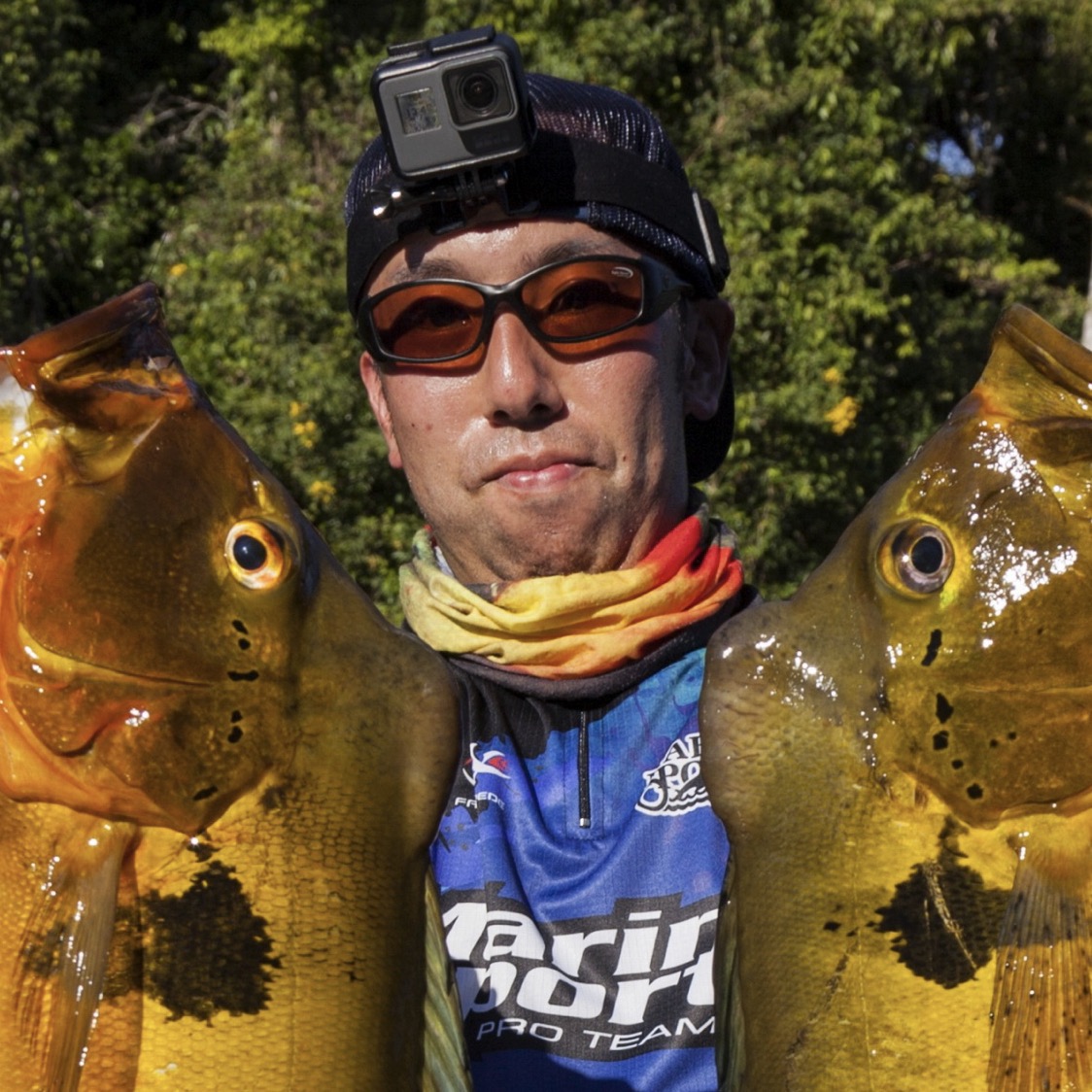
We've also received reports of successful peacock bass catches from ADUSTA dealer BONE FISHING testers in Singapore, showing that people overseas are also enjoying this exciting topwater game.

In Japan, reports of successful reservoir catches from ADUSTA tester Henmi, including a 66cm, 4kg+ catch by Satan Shimada, indicate that the Silent Blaster's unique high-peel performance is being utilized in a growing way.

Next time, I'd like to focus on the structure of the Silent Blaster, including its prototype and internal design, and give you a behind-the-scenes look at how it led to catching big bass with the Barbatos.


Comments