


The Secret Story of NeoRean Development ~Episode 3~ Prototype and Testing: "Leaving 'that sound' on the water's surface—A record of development that pursued the ideal."
── The R&D Crucible: Breeding the Neo-Rean from Lost Blueprints and Pro Field Tests
Behind every elite hardbait on the market lies a graveyard of forgotten concepts. The Neo-Rean is no exception.
Once we nailed the baseline fluid dynamics of the internal chamber, we had to transition from a conceptual design to a battle-hardened surface plug. Today, we're cutting into the development history, looking back at the two "phantom prototypes" that birthed this platform, and showing exactly how 0.1-gram ballast adjustments completely redefined its aerodynamic and acoustic capabilities.
The DNA Matrix: Fusing Two Foreign Concepts
The architectural footprint of the Neo-Rean is a cross-pollination of two completely separate projects I engineered years ago. Both models never made it to global mass production, but their performance profiles remained etched in our design database.

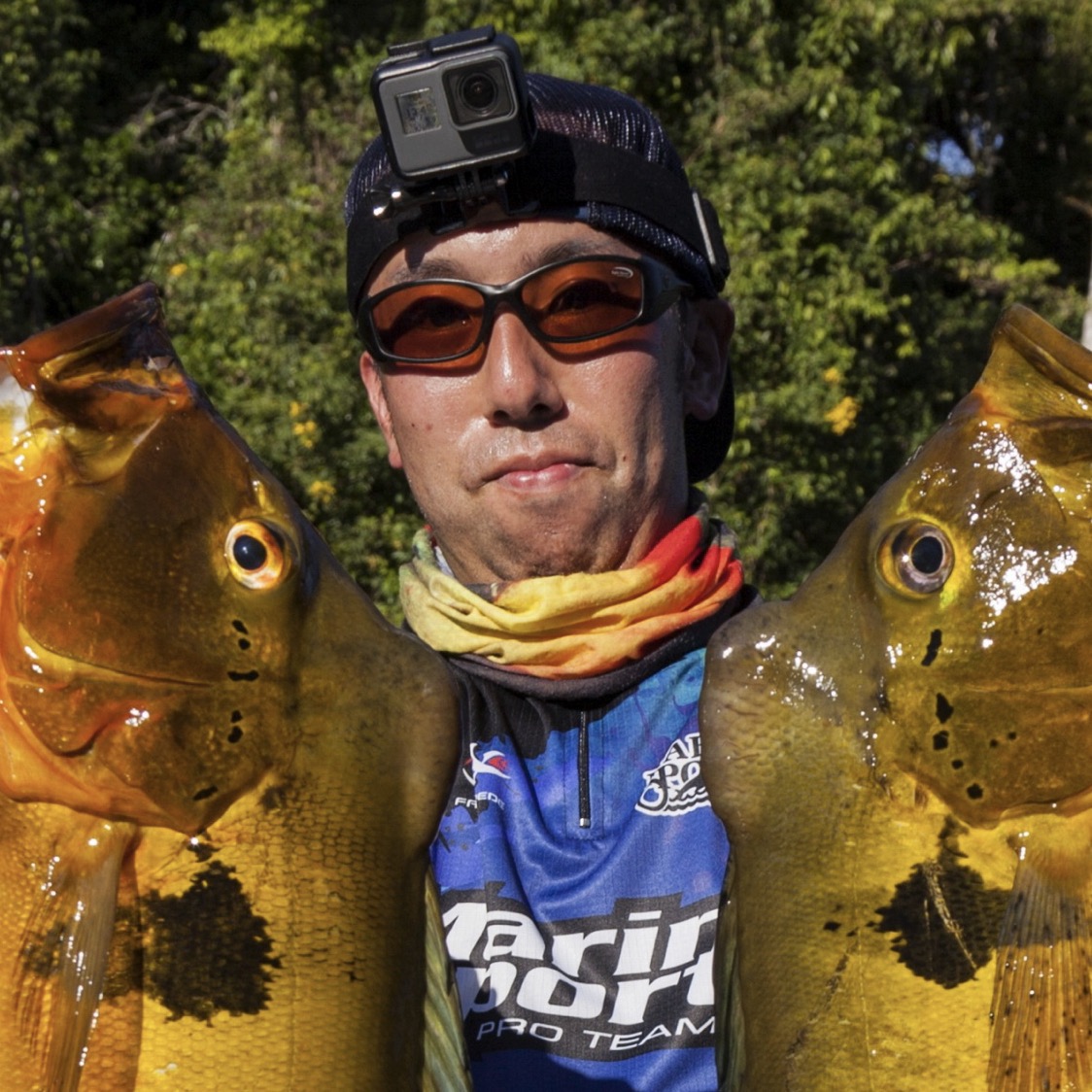
The Blueprint Alpha: The ADUSTA Chugbait This raw, oversized topwater concept was originally cast for the brutal peacock bass fisheries of the Brazilian Amazon. It utilized a dual line-eye configuration, engineered to let operators shift between a wide, sweeping walk-the-dog cadence and a sharp, surface-gouging chug. While manufacturing complexities kept it on the shelf, it proved that a multi-action cup could dominate aggressive apex predators.

The Blueprint Beta: The Hand-Carved VAGABOND Endline In stark contrast to the aggressive Amazonian plug, the Endline was a highly intricate, hand-carved balsa wood popper crafted explicitly for pressured domestic largemouth bass. It featured an ultra-realistic anatomical finish, high casting density, and a subtle, high-finesse on-water response.
By overlaying the raw mechanical power of the Chugbait with the stealth and hydrodynamic precision of the Endline, we established the ultimate foundation for a next-generation pencil popper.

Hydrodynamics in the Tenth-Millimeter Realm
1. Cup Anatomy and Hydro-Acoustics
A popper's true productivity is determined entirely by the pitch of its acoustic signature and its water displacement. To capture the exact acoustic frequency we wanted, we went through a brutal trial-and-error cycle with our 3D hull mockups.

The Extended Chin Prototype: We extended the lower jaw forward to scoop more water, but the lip acted like a diving plane. The bait submerged too deeply on the twitch, completely breaking the recovery cadence.

The Oversized Head Prototype: We expanded the frontal skull radius to displace more surface area, but the expansion deadened the acoustics, shifting the deep chug into an unnatural, hollow click.

The Dual-Chamber Solution: We systematically evaluated vertical oval cups, horizontal wide cups, shallow dimples, and radical bevel angles. Our testing finally converged on a specialized Dual-Chamber Multi-Cup configuration.

We analyzed the relationship between physical geometry and static flotation alignment. The precise angle at which a hardbait sits at rest, combined with how deeply its tail sits below the surface film, dictates exactly how much air the cup traps during a rod sweep. You cannot design a shape in a vacuum and expect a clean sound; the body lines and the specific gravity must exist in perfect equilibrium.

2. The Acoustics of the Bite
Our obsession with topwater acoustics comes from decades of tracking big-fish data. Classic baits like the Heddon Chugger Spook taught us that a deep, low-frequency acoustic thud paired with a long, dead-stick pause possesses a unique calling power that pulls giant bass out of deep structure. This historical data heavily dictated the internal layout of the Neo-Rean.

The Zeal Prop features a water-push action and a sweet popping sound.
Conversely, we also analyzed highly responsive, water-pushing walk-the-dog baits like the ZEAL Prop and the Yellow Magic. These platforms proved that a lighter, sweet, spitting sound produced during a high-speed walking retrieval can force pressurized fish into a reactionary surface strike.
The Neo-Rean was engineered to command both ends of that tactical spectrum. It delivers a heavy, structural chug on a hard rod sweep, yet sings with a light, sweet popping note the second you slip the line slack and initiate a high-tempo walking cadence.

Aerodynamic Balancing: Defeating Flight Tumbling
Once the hydrodynamics were dialed in, we hit our next hurdle: ballast management. We ran through dozens of internal weight layouts, fine-tuning the internal lead and tungsten blocks in 0.1g increments.

During early high-speed camera analysis, we discovered that even a microscopic shift in the center of gravity drastically altered the bait's aerodynamic flight path. If we positioned the internal weights too far forward, the tail would swing mid-cast, causing the plug to helicopter, catch wind, and drop short of the target. If we stacked too much mass in the tail, the casting distance skyrocketed, but the bait sat dead-vertical at rest, destroying its ability to walk-the-dog.

We needed an exact, front-to-rear ballast ratio that would lock the bait into a stable, tail-first projectile mid-cast, yet instantly level out into a perfect horizontal skating alignment the micro-second it touched the water film.
This layout allows anglers to park their boat far outside the fish's drop-off radar, execute long-distance sniper casts into ultra-tight pin-spots under overhanging brush, and immediately trigger strikes with a heavy-displacement pop.
Proof of Concept: Real-World Field Assets

With our optimized prototypes locked in, we bypassed the sterile test tanks and deployed the Neo-Rean directly into two of the most notorious, high-pressure reservoirs in the region: Takayama Dam and Muro Dam. Both fisheries are legendary for holding highly educated, tournament-grade bass that will completely ignore a non-optimized presentation.
Despite tough post-frontal weather conditions, the Neo-Rean cracked the code, extracting multiple quality fish using two distinct presentation patterns:

The Structural Chug & Long Pause: Launch the bait tight to the rock face. Let the splash rings completely dissipate. Execute a heavy, single downward stroke to fire off a deep, low-frequency chug, trapping a massive bubble trail. Pause. Let the bait sit dead-still. Deliver a micro-twitch to pop the cup gently. This classic presentation creates an undeniable surface presence that forces heavily pressured, suspicious fish into an absolute commitment.

The High-Tempo Slit-Slack Walk: Using a slack-line rod twitch, you can force the Neo-Rean into a tight, hard-skating walk-the-dog sequence. The bait pushes a wall of water left-to-right while continuously emitting a crisp, spitting pop that mimics a panicked schooling baitfish cut off from the school.

Refined to a Cutting Edge
The Neo-Rean is the successful evolution of historic design concepts, refined through modern fluid-dynamics and extreme weight tolerances. By tuning the hull to a tenth-of-a-millimeter spec and managing the internal weights to a fraction of a gram, we transformed a classic topwater concept into a highly reliable, long-casting surface weapon.
In our next entry, [Part 4: The Path to Mass Production – Steel Mold Tolerances and Custom Aesthetics], we’ll show you exactly how we transferred this handcrafted performance into our industrial injection bays without losing a single ounce of its custom soul.
See you on the water.

Comments