


[A-PEN68 Development Log] Episode 9: A-PEN68 as a Return to the Origin
Updated: Jun 5
── Going Back to the Source: The Genesis of the A-PEN 68
Let’s take a quick breather from the heavy field-testing logs and talk about something that defines the very soul of this project: returning to your roots.
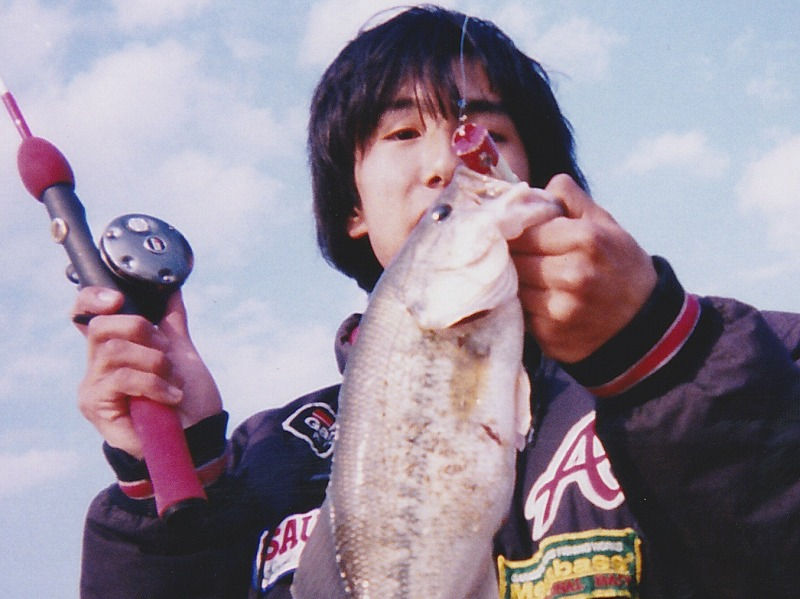
My obsession with bass fishing caught fire right between Japan's first and second major bass booms—around 1986. I was only in the second grade when I discovered the sport, spending every spare minute casting into local domestic dams and reservoirs.
Back then, information didn’t sit in the palm of your hand. I grew up in a pretty rural area, completely cut off from the latest tactical trends or finesse methods. My tackle box was sparse. I had a Daiwa Bass Hunter crankbait, a few inline spinners, and maybe a single grub soft-plastic from a brand I couldn't even name, which I’d rig onto a 5-gram jig head and just straight-retrieve. That was it.
We had heavily limited gear, but the sheer joy of fooling a single fish was unmatched.
Naturally, catching them wasn't easy. I’d grind all day just to land one, maybe two fish if I was lucky. But that one fish meant the absolute world. Looking back, the intrinsic value of a single catch was massive compared to today’s numbers-driven culture.
Because the fishing was tough, I found myself deeply drawn to topwater tactics.

By 1994, as a high school freshman diving headfirst into serious angling, I choked a 48cm bass on a buzzbait. Seeing that explosive surface strike permanently rewired my brain. Topwater isn't an easy numbers game. But the sheer adrenaline payoff when a fish breaches the surface film is unmatched.
“I just want to catch one good fish on a topwater plug.” That raw desire was everything to me.
The Shift Toward Monster Baits
Back then, our baseline gear looked very different. The standard hard baits we threw weighed anywhere between 7g and 18g, spooled on 12lb to 16lb nylon monofilament. For the vast majority of bank anglers hitting small-scale venues like reservoirs, small rivers, and farm ponds, this was the absolute default setting.
But as the years progressed, the industry's average lure size began to swell.
The market shifted from standard 1oz topwater plugs to massive swimbait platforms, eventually giving birth to the "Giant Bait" subculture. Lures just kept getting bigger and heavier. Today, it’s completely normal to see an angler throwing a Jointed Claw 178 on a standard Medium-Heavy rod. But back in the day, a 178mm bait was considered an absolute mega-lure—an intimidating monster that required a highly specialized, heavy-duty rod just to cast.
This evolution makes me wonder: Is the modern complaint that "fish are getting harder to catch" partly because our average lure sizes have simply outgrown our local waters?
When I participate in community cleanups at my local reservoirs, I routinely recover snagged lures and discarded lines. I constantly find massive, heavy-gauge hard baits and incredibly thick line that make me think: Are people really throwing this giant stuff here all day?
If you are operating a bass boat on massive, deep-water fisheries like Lake Biwa, Ikehara, or Nanashiki, running heavy tackle makes total sense. But for anglers like me who primarily fish small-scale venues—tight rivers, local ponds, and pressured reservoirs—your approach has to adapt.
Unfortunately, because mainstream fishing media has spent decades glorifying big-bait tactics on massive waters, many anglers try to force those exact same tactics into tiny, high-pressure environments. It creates a massive tactical mismatch. You have to match your lure profile to the actual scale of the venue and the pressure of the fishery. Landing a giant fish is incredible, don't get me wrong. But for me, the true magic of lure fishing lies in the pure chess match of fooling a fish with a perfectly presented hard bait.

Finding the Sweet Spot: The 7g to 14g Architecture
When you look at actual catch rates, the daily numbers from the late '80s—the dead zone between the two major bass booms—aren't actually all that different from the catch rates we see today.
That realization made me stop and ask myself a fundamental question: "What happens if we reset the baseline to the golden era?"
I decided to consciously strip back my modern approach, building my tactical setups around 12lb line and lures hovering right around the 10-gram mark. Historically, this specific size range yielded my highest strike-to-cast ratio. Whether I was working a deep reservoir or a tiny farm pond, this profile consistently tricked quality, mature fish without spooking the school.
And now, through my obsession with topwater bream fishing (Chining), that exact same realization has hit me all over again. There is an undeniable, magical balance hidden within the 7g to 14g size range.
Modern tackle technology is lightyears ahead of the '80s. Our rods are crisper, reels are more efficient, and advanced braided lines have evolved completely. Anglers can now effortlessly max out their casting distance with a lightweight 7g plug—something that used to be a frustrating, backlash-prone nightmare.
Because our gear can now handle it perfectly, this envelope has become the ultimate sweet spot for maximizing fish contact across multiple species, whether you are targeting finicky Black Bream or heavily pressured Largemouth Bass.

The A-PEN 68: A Pure Return to Instinct
This brings us directly to the ADUSTA A-PEN 68.
Measuring 68mm and weighing in at 8g to 8.5g, this pencil bait sits dead-center in that high-productivity size range.
The real-world data speaks for itself. The field reports from our development team, the insane bass numbers we racked up on the Yodo River, and the absolute slaughter of saltwater bream across Osaka Bay during testing proved it. This specific footprint creates the highest possible surface-area connection between the angler and the fish.
For me, the A-PEN 68 isn’t just another downsized topwater plug in the catalog; it is a literal return to my roots.

Lure fishing is a beautifully unrestricted sport. It allows us to interact with nature through completely different personal philosophies. Everyone has their own style, their own rhythm, and their own definition of success. The fact that the sport accommodates all of these diverse mindsets is exactly why it has grown into a global obsession.
It’s not just about chasing a generic trophy size. It’s not about breaking a personal best every trip, nor is it just about mindless numbers.
Reading the transitions of a complex field, tracking down the bio-signature of a fish, and deciphering the puzzle through a hard bait—that entire process is a raw adventure.
I wanted to strip away the over-complicated noise of modern trends and design a tool that brings people back to that foundational joy: the pure thrill of the bite. That core philosophy is what kept us pushing forward through every manufacturing bottleneck during the development of this lure.
In the next entry, we’ll cut open the bait and dive deep into the internal engineering of the A-PEN 68. I’ll show you exactly how we carved out maximum air-chamber buoyancy inside a compact 68mm, 8.5g frame while retaining flawless walk-the-dog stability and long-distance casting ballistics. We're calling it [Deepening Development: Innovations in Internal Buoyancy].
See you on the water.
Gear Note:The ADUSTA A-PEN 68 and our complete technical lineup are distributed worldwide exclusively through our Authorized Specialty Tackle Shops. Support your local pro shop and check regional availability today!

![[A-PEN68 Development Log] Episode 8: A Year of Being Hooked on Topwater Fishing for Black Sea Bream](https://static.wixstatic.com/media/dedf3a_df72efb7f07e44f89189aa82fcf8ca26~mv2.jpg/v1/fill/w_800,h_600,al_c,q_85,enc_avif,quality_auto/dedf3a_df72efb7f07e44f89189aa82fcf8ca26~mv2.jpg)
![[A-PEN68 Development Log] Episode 7: From A-PEN65 to A-PEN68](https://static.wixstatic.com/media/dedf3a_3cfb3f67e33b42119989ef595b48c170~mv2.jpg/v1/fill/w_980,h_653,al_c,q_85,usm_0.66_1.00_0.01,enc_avif,quality_auto/dedf3a_3cfb3f67e33b42119989ef595b48c170~mv2.jpg)
Comments