


The Secret Story Behind the Development of the A-PEN ~Episode 1~
- R.Nakanishi
- Apr 14, 2020
- 4 min read
The Genesis of the A-PEN: Jungle R&D and the Acoustic Matrix of the Amazon
By: Nakanishi, ADUSTA Lure Designer
Hey everyone, Nakanishi here, lead lure designer for ADUSTA.
In this blog series, I’m pulling back the curtain on the development stories, design concepts, and custom tuning secrets of our topwater lineup—details we’ve never shared with the public until now.
For Episode 1 of the ADUSTA A-PEN design story, we are going back to the absolute beginning. Why did we decide to develop this specific walking pencil, and what radical environment shaped its final performance matrix? Let’s jump in.

1. The Catalyst: A Direct Mission from the Brazilian Jungle
The journey started with a flight spanning a day and a half from Japan to the heart of the South American continent: Brazil—home to the massive river systems of the Amazon.
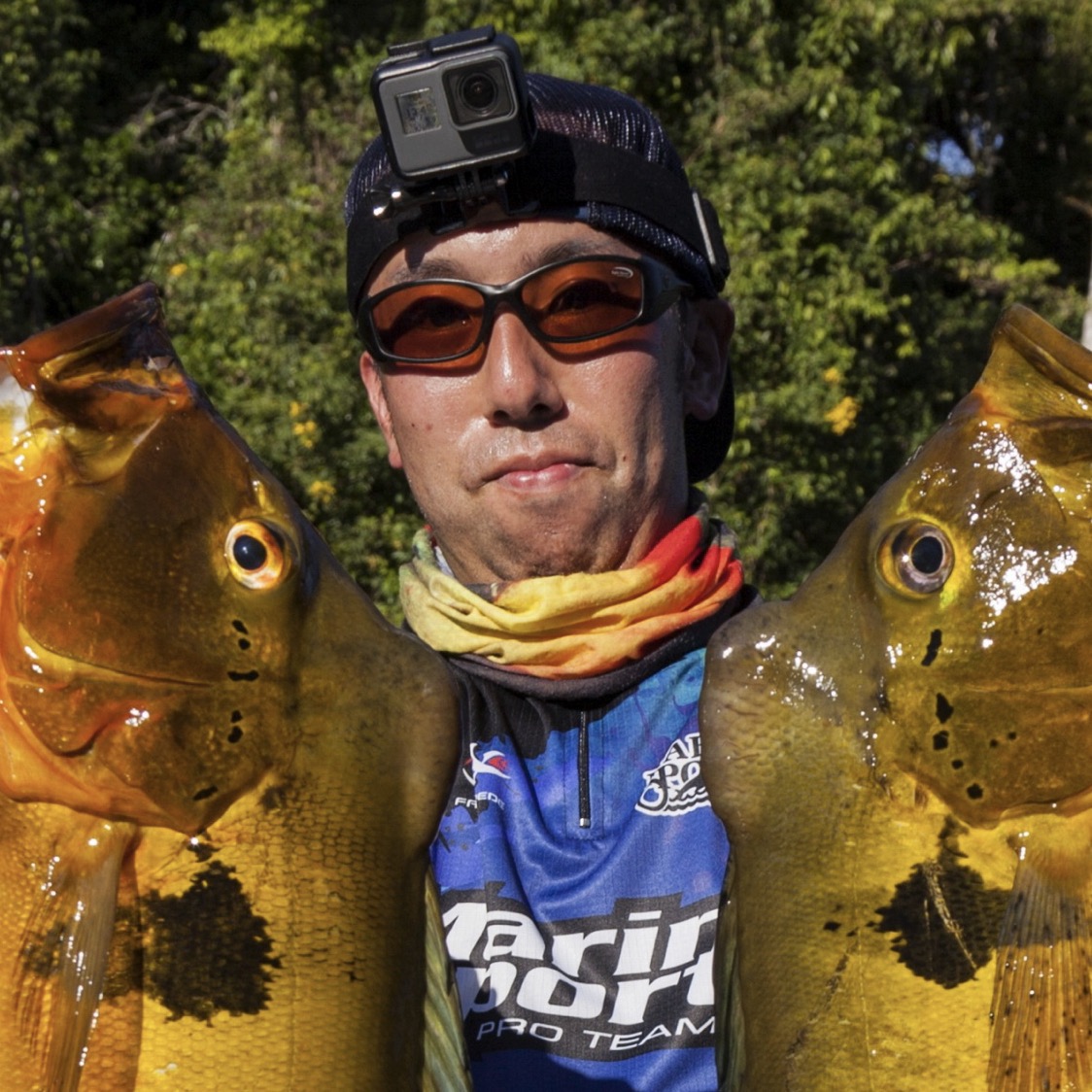
The spark for the A-PEN came from a strategic meeting with Hiro-san, the president of Marine Sports and ADUSTA’s official distributor in Brazil.
His initial engineering request was hyper-focused on targeting trophy Peacock Bass: "We need a high-performance walking stickbait with exceptional aerodynamics for long-distance casting. It needs to sit at a tail-weighted angle at rest for immediate startup response, and it must emit a massive, low-frequency one-knock acoustic signature."
It was a beautifully straightforward request, and I distinctly remember feeling incredibly motivated to pour every ounce of my topwater design history into this single 90mm frame.

2. Jungle Testing: The Ultimate Proving Ground
In the summer of 2017, I was fortunate enough to join Hiro-san deep in the Amazon basin for real-world field validation. For a lifelong aquarium and freshwater fish enthusiast, the Amazon is the ultimate holy land.
More than that, it was the exact wild landscape I had daydreamed about while reading Takeshi Kaiko’s legendary fishing novel, OPA!.
Going toe-to-toe with apex predators that possess legendary crushing power while simultaneously testing our hard-bait prototypes—I couldn’t have asked for a more perfect laboratory.

3. The Power of Hydro-Acoustics underwater
We spent four intense days pounding the water on the Teles Pires River, a major tributary of the Amazon. I cycled through our early A-PEN prototypes, our specialized Ripper prop-bait test models, and a variety of local Brazilian hard baits to truly decipher what it takes to trigger strikes in the jungle.
The single most critical variable I discovered was acoustic presence.
Whether you are fishing a walking pencil, a prop bait, or a topwater popper, your lure must emit a heavy, high-appeal acoustic signature that travels deep into the water column. I realized that different lure categories require entirely different sound frequencies to trigger reaction strikes.
Experiencing this firsthand gave me a profound realization: the raw, untamed nature of the Amazon described decades ago in OPA! remains completely unchanged today. The rules of the jungle are universal.

4. Demystifying the "Monster Fish" Tackle Myth
In Japan, mainstream media often associates fishing for exotic jungle species with ultra-heavy, rigid "monster-hunting" rods. Before stepping into the jungle, I was completely guilty of buying into that exact same mindset. I packed the heaviest, stiffest rods I could find and headed to the river.

The reality on the water was a massive eye-opener.
While we did utilize incredibly thick 80lb fluorocarbon shock leaders to protect against the razor-sharp teeth of the local fish, our mainlines were standard 30lb to 40lb braided lines. More surprisingly, the local pros were using 5’6” to 6’0” Medium-Light (ML) to Medium (M) power rods optimized strictly for aggressive minnow jerking and rapid topwater walking.
To be honest, it shocked me at first. But once I started casting, the physics made perfect sense.

If you attempt to burn topwater prop baits, execute a continuous walk-the-dog cadence, or hard-jerk minnows all day long using a rod over 6 feet with heavy, rigid action, your wrists and forearms will give out within hours. A short, responsive technical rod allows you to fish tirelessly while easily handling and pinned down hard-fighting 60cm+ Peacock Bass without any structural issues.
It re-taught me a foundational lesson in lure design: You should never build your tackle configuration around the perceived size of the fish; you must build your tackle setup around the physical requirements of the lure you are working.

5. Engineered for All-Day Endurance & High-Strains
Integrating that exact tactical jungle setup into a highly manageable topwater pencil bait became the second core pillar of the A-PEN design philosophy.
Overcoming Heavy Shock Leaders and Heavy Hook Rigging
To make the A-PEN a global success, it had to perform flawlessly under severe mechanical strain. We engineered the hull to execute a sharp, wide zig-zag walk even when dragged by thick, heavy 80lb fluorocarbon leaders.
We fine-tuned the internal ballast locations to ensure the bait maintains its aerodynamic profile during long-distance casts, allowing anglers to punch stealthy presentations directly into pinpoint targets—like tight overhanging brush, shoreline logs, and isolated weed pockets.
Finally, we calculated the absolute perfect buoyancy threshold so that even when upgraded with heavy-wire, jungle-grade saltwater treble hooks, the A-PEN retains its perfect tail-down resting angle and responsive walking action without sinking or stalling.
Experiencing the raw power of the Amazon was the catalyst that allowed us to lock in these extreme performance tolerances.
In our next entry, Episode 2, we will dive into the history of the design lab—explaining how the A-PEN's physical body contours, unique cross-section, and hand-carved heritage were born.
Stay tuned!


Comments